
Meeting flood risk with nature-based solutions in EU coastal regions
on October 22, 2025
-
Contributors
Samuel Gregory-Manning -
Experts
Samanta Bačić, Silvana Di Sabatino -
Categories
Articles, Environment -
Tags
adaptation, biodiversity, climate, coastal, ecosystems, flooding, horizon europe, infrastructure, mediterranean, mitigation, resilience, restoration, seagrass, sustainability, wetlands -
Share this
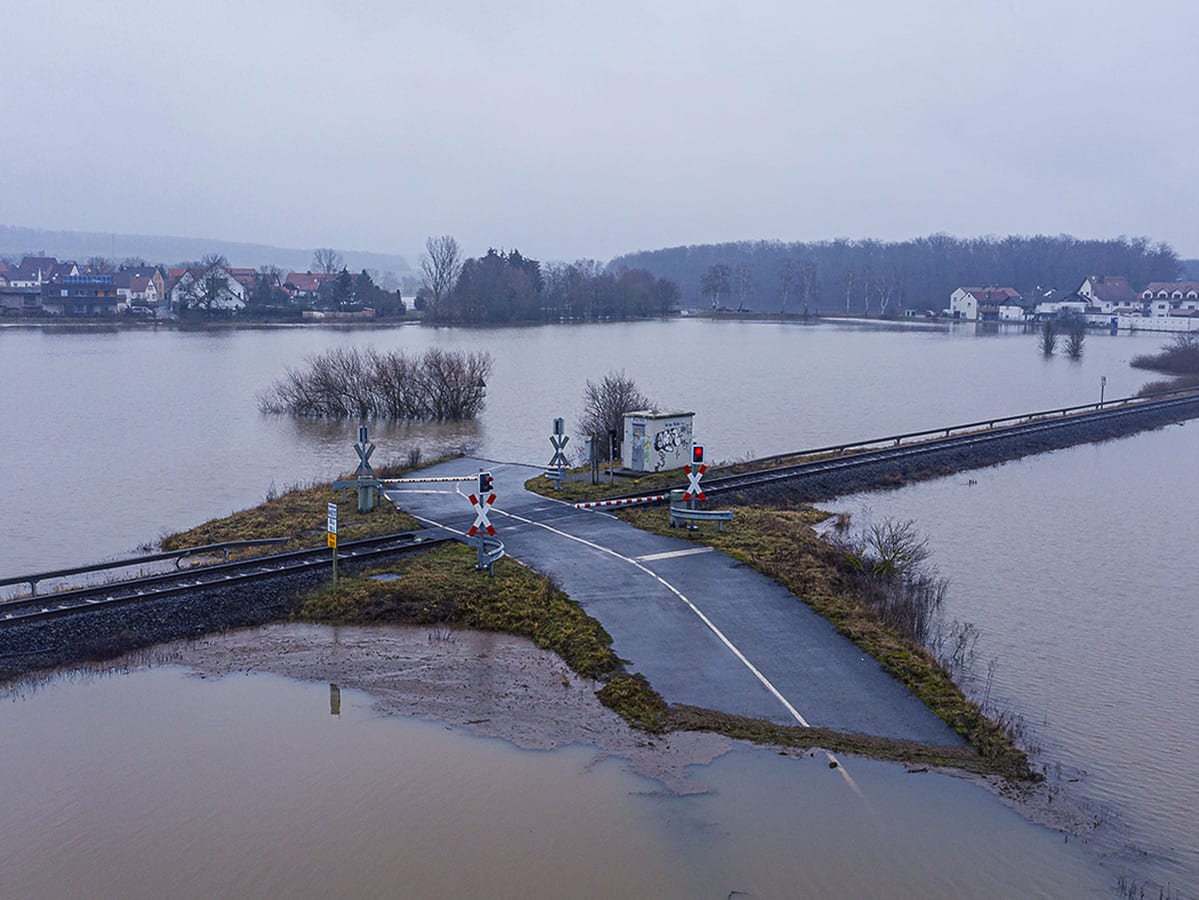
As the effects of climate change become increasingly apparent, EU citizens are facing growing risks of more severe and frequent flooding. Climate adaptation is being prioritised to meet this risk and protect people, properties and infrastructure, with several EU-funded projects pioneering approaches using nature-based solutions.
The impacts of flooding were especially evident in 2024, when around 2 million people were affected by storms and floods in September. Catastrophic flooding in the Valencia region of Spain hit headlines, with over 200 lives lost and extensive damage wreaked on homes and businesses. Last summer alone, 53 regions were affected by floods in the EU (‘NUTS3’) with losses at EU level expected to amount to 6.5 billion euros in 2025, and 20.2 billion euros by 2029.
Flooding in Europe – a swelling risk
More than one third of Europeans live in coastal regions, while 10% of the EU’s urban population lives in areas at risk of flooding. The flooding risks to these regions are set to increase as climate change progresses.
2024 was the warmest year on record, with the average temperature exceeding 1.55°C above pre-industrial level. In a world under 2°C of global warming, the number of Europeans exposed to annual flooding from rivers is projected to reach 338,000, and increase to 484,000 under 3 °C. Meanwhile, rising sea levels are projected to expose between 1.4 and 2.2 million people in Europe to coastal flooding by 2100.
These swelling risks also threaten the economies of these regions; analysis has shown that some coastal regions set to be hit especially hard by sea level rises could experience disastrous economic consequences. For example, the Veneto and Emilia-Romagna regions in Italy could experience GDP losses of 20.84% and 10.16% respectively. Under high emissions scenarios, sea level rises could incur total costs of €872 billion by the end of the century.
Building resilience with nature
In response to the growing health and economic risks posed by current and future flooding and other extreme weather events under a changing climate, there has been greater attention across the EU on climate adaptation efforts that build resilience to these hazards, including in vulnerable coastal regions.
One type of adaptation approach being explored by various EU-funded projects is nature-based solutions. These interventions involve using the natural features and processes of habitats and ecosystems to address and reduce the risk of climate impacts.
The Horizon Europe-funded DesirMED project is testing nature-based solutions across the Mediterranean. Dr Samanta Bačić is part of a team working on the project to address flood risk in Croatia, where they are using Geographic Information System-based models that support the integration of nature-based solutions like green infrastructure and wetland restoration into urban and coastal planning.
Dr Samanta Bačić, Senior Assistant at the Faculty of Civil Engineering, Architecture and Geodesy at the University of Split, Croatia: “Nature-based solutions are increasingly being recognised as essential tools for climate adaptation. Unlike traditional grey infrastructure, nature-based solutions harness natural processes and ecosystems to mitigate climate risks, and they can evolve and adapt over time, enhancing their long-term effectiveness. For example, instead of using concrete when channelising urban streams, cities are opting for re-naturalising streams which helps reduce flood risks.” - Read the full interview with Samanta Bačić
OPERANDUM, a Horizon 2020-funded project, also explored nature-based solutions for flooding, including in the especially vulnerable Emilia-Romagna region in Italy, explained the project’s coordinator, Professor Silvana Di Sabatino.
Silvana Di Sabatino, Professor in Atmospheric Physics at the University of Bologna, Italy: “When addressing coastal erosion, there are several nature-based solutions options. We had a dune restoration prototype in the northern part of the Emilia-Romagna region where we rebuilt the dunes with natural components and revegetation. However, this action alone was not sufficient, we also needed to address the ocean component, which involved having more Posidonia oceanica [a Mediterranean species of seagrass] that act as a buffer layer. This means that we then have the dune and seagrass restoration actions working together as a smart way to address coastal erosion now and in the future.” - Read the full interview with Silvana Di Sabatino
Nature-based solutions – multifunctional approaches
Nature-based solutions offer cost-effective approaches to climate adaptation as they can entail a range of additional benefits for biodiversity, carbon storage, pollution reduction, and other economic, health and recreational opportunities.
The EU’s Strategy on Adaptation to Climate Change recognises the multifunctional potential of these nature-based solutions for building climate resilience and meeting other key climate and environmental goals of the European Green Deal.
Nature-based solutions can help meet the binding targets to restore 20% of the EU’s degraded ecosystems at land and sea by 2030 under the Nature Restoration Regulation. More than 80% of EU habitats are in poor status; restoring and creating habitats like wetlands, forests, grasslands, rivers and lakes aids in nature recovery while also restoring the natural flood management services these ecosystems provide.
International collaboration for local adaptation
Although there is growing interest in the use of nature-based solutions for climate adaptation, there are several barriers to their development, including a lack of resources, knowledge and infrastructure to translate these approaches into practice.
Nature-based solutions often require higher initial investments than traditional infrastructure but can result in more favourable cost-benefit ratios in the long-term, while hybrid options offer ways of educating practitioners and encouraging the adoption of these approaches.
Professor Di Sabatino stressed that proper planning for nature-based solutions is essential to ensure that interventions are appropriate: “nature-based solutions can be the correct option, if the problem is properly defined and considered with thorough analysis, correct modelling and a methodology that provides proof that the approach is suitable for the context and will be effective.”
Both scientists highlighted that considering the local context is also key, with projects like DesirMED and OPERANDUM helping to exchange best practices from across the EU: “We have to involve a diverse range of experts, stakeholders and citizens in the planning process to make sure nature-based solutions fit the specific needs of local communities. These approaches are not just short-term fixes, they represent new approaches to urban development that are resilient, inclusive and ecologically grounded”, said Dr Bačić.
Related content:
• A scientist’s opinion: interview with Dr Samanta Bačić on nature-based solutions for climate adaptation
• A scientist’s opinion: interview with Prof. Silvana Di Sabatino on nature-based solutions for climate adaptation