From forever chemicals to safer alternatives: coordinated efforts to improve chemical safety in Europe
on March 26, 2025
-
Contributors
Rosa Garcia-Verdugo -
Experts
Pascal Sanders -
Categories
Articles, Research -
Tags
chemicals, environment, health, innovation, interview, monitoring, pfas, regulation, safety -
Share this
We spoke with Pascal Sanders, project coordinator of PARC (Partnership for the Assessment of Risks from Chemicals), a 7-year Horizon Europe funded European partnership aiming to protect human health and the environment from chemicals in Europe.
What is PARC and why is it important/necessary?
 Pascal Sanders: PARC is a European research partnership that brings together over 200 organisations from 29 countries to improve chemical safety assessment. Co-financed by the EU Commission and Member States, it unites government agencies, research institutes, and universities to better protect human health and the environment from chemical risks.
How does PARC plan to address current and future challenges in chemical safety?
Pascal Sanders: Currently, keeping track of the thousands of chemicals in everyday products and the environment is challenging as scientists still do not fully understand how these chemicals affect people and nature, especially when different chemicals mix together.
To address these issues, PARC works on two main fronts. First, we are developing new approaches to assess chemical safety and to understand how chemicals affect humans and ecosystems. We aim to reduce animal testing, and use in vitro testing, artificial intelligence and computer modeling instead.
Second, we are conducting Europe-wide monitoring of chemicals in humans and the environment, developing early warning systems for dangerous substances. Monitoring frameworks are also essential in the assessment of policy impacts on our collective use of chemicals and products.
Further, PARC develops and openly shares scientific tools, data and knowledge through its online platforms PARCopedia and PARC Toolbox, while working to standardise laboratory practices across Europe.
Five EU member states (Denmark, Germany, Sweden, Norway, and the Netherlands) aim to restrict virtually all uses of over 10,000 PFAS. Can you briefly explain what they are, why is a restriction needed and what is PARC doing in this respect?
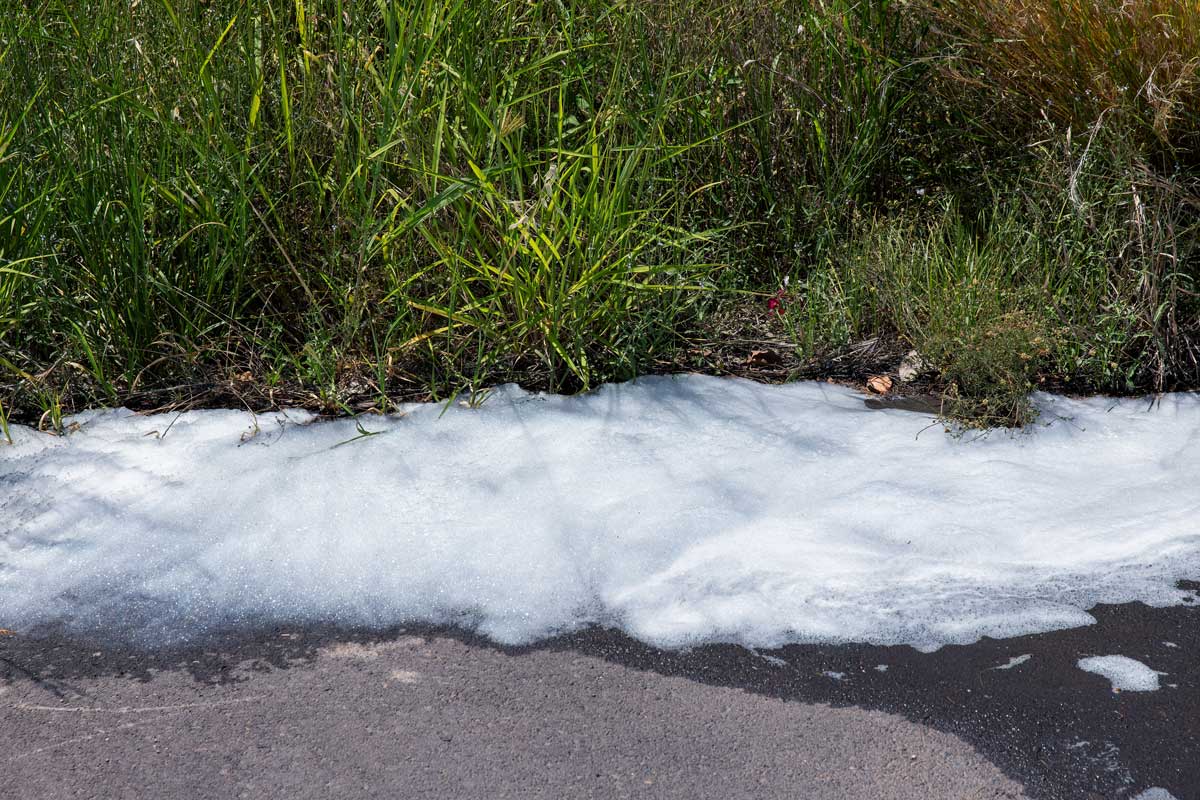
Pascal Sanders: PFAS (polyfluoroalkyl substances) are synthetic chemicals used in many products, from non-stick cookware to electronics. They are called "forever chemicals" because they do not break down in the environment and accumulate in living organisms, including humans.
While PARC is not directly involved in policy decisions, we are studying PFAS contamination in air, water, and soil, measuring exposure and toxic effects in humans, and developing better detection methods. Our objective is that this research will inform future European regulations on these substances.
Recently, a study in Le Monde indicated that cleaning Europe from PFAS could cost up to 2,000 billion euros over a period of 20 years, so 100 billion euros per year. Why is it so difficult to get rid of PFAS? And what can PARC do about it?
Pascal Sanders: In fact, PARC focuses on monitoring and preventive risk assessment rather than direct cleanup of PFAS contamination.
While PARC partners work with European projects and national ministries on PFAS cleanup strategies, their main contribution is more preventive: developing safer chemical alternatives through its "safe and sustainable by design" (SSbD) approach [a voluntary approach to guide the innovation process for chemicals and materials, announced on 8 December 2022 in a Commission Recommendation] and toolbox.
How does PARC protect health and environment while supporting chemical innovation?
Pascal Sanders: As previously mentioned, we support the "safe and sustainable by design" approach, which guides the development of safer chemicals from their conception. PARC is working to assess chemicals more efficiently by bringing together teams from different regulatory areas, including chemical safety, pesticides, food safety, and environmental protection.
These teams share their scientific methods and data to create a unified approach for evaluating each chemical substance, which helps avoid duplicate work and ensures consistent safety assessments across all areas.
In addition, we have developed a toolbox to help companies screen new substances for potential hazards early in development, making it easier to select safer alternatives to dangerous chemicals.
How does PARC's work contribute to policy-making at both national and European levels?
Pascal Sanders: PARC combines current research with new findings about chemical risks to inform policymakers and help them make better decisions.
Specifically, we aim to bridge the gap between science and policy through two channels. First, we facilitate dialogue between national authorities, EU agencies, and researchers. Second, we've established coordination hubs in each participating EU country to ensure our research aligns with national and EU priorities.
What measurable scientific advancements has PARC achieved so far?
Pascal Sanders: We have published over 200 scientific works and established collaborative networks across Europe. Particularly, we have connected scientists across different fields to work together on projects that address regulatory challenges.
Key achievements include developing standardised methods for monitoring chemicals in humans and the environment, creating modeling platforms for risk assessment, and launching a PARC Toolbox to help companies design safer chemicals. We are also improving early warning systems for detecting dangerous substances.
What challenges is PARC facing in creating a cohesive network across sectors and countries?
Pascal Sanders: Building understanding between different scientific communities and regulatory sectors takes time. Our main challenge is maintaining momentum while adapting to rapid technological changes and evolving public concerns. Success depends on demonstrating that our work has real impact on health and environmental protection.