
Prajal Pradhan on food loss and waste: ‘Our current food systems are broken’
on December 18, 2024
-
Contributors
Samuel Gregory-Manning -
Experts
Prajal Pradhan -
Categories
Interviews -
Tags
climate change, eu policies, food systems, food waste, interview, sustainability -
Share this
Dr Prajal Pradhan is an expert in climate change, food systems, and sustainable development goals. He is an assistant professor at the University of Groningen (the Netherlands) and a visiting senior scientist at the Potsdam Institute for Climate Impact Research (Germany).
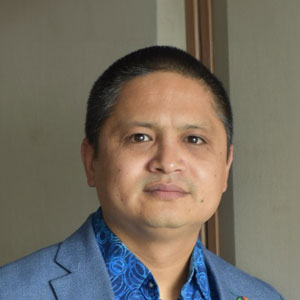 Prajal Pradhan: Not only food waste, but also food loss is an issue for the climate and environment.
You were a lead author of the IPCC Special Report on Climate Change and Land, which includes reducing food waste as having strong climate mitigation and adaptation potential. Why is food waste an issue for the climate and environment?
Prajal Pradhan: Not only food waste, but also food loss is an issue for the climate and environment.Let me first clarify the difference between food loss and food waste. Food loss is the food that is reduced before it reaches us during harvesting, processing, or transportation. This mainly happens in low- and middle-income countries due to poor infrastructure.
In high-income countries, the issue is more about food waste, which is food discarded at a retailer or consumer level. In Europe, there are different levels of infrastructure, so food loss and waste differ between countries. Thus, we need to account for food loss and waste while discussing European policies.
Food loss and waste are related to climate change because the agricultural activities that produce food require a lot of resources and are responsible for crossing several planetary boundaries. Our food system contributes to around 1/3 of greenhouse gas emissions if we look at the whole system, including production, processing and transportation.
Also, there are issues related to agricultural activities, such as the overuse of phosphorous and nitrogen fertilisers, pesticide use, deforestation, biodiversity loss, water for irrigation, and atmospheric ozone pollution. So, producing food harms our planet, and if food is lost or wasted, we’re damaging our planet by producing more food than required without nourishing ourselves.
Modern food systems are complex and globalised, why is this an issue for food sustainability?
Prajal Pradhan: The main issue with our current food systems is that they are broken. On the one hand, our food systems contribute to transgressing several planetary boundaries with vast amounts of food waste and loss. On the other hand, billions of people suffer from malnourishment, including hunger, overweight, obesity, and micronutrient deficiency.
I advocate for regional and local food systems to fix broken food systems by reconnecting producers and consumers. Increased distance between producers and consumers is also a reason for food waste. The disconnection has created issues of discarding food of specific shapes, sizes, and ripeness because of not appreciating the effort involved in producing that food. If we are in a grocery shop and see food that doesn’t look perfect or isn’t quite ripe, we might not buy it even if it is still good to eat, whereas if we grow our tomatoes, say, we try to eat all of them.
So, it’s a question of reconnecting producers and consumers so that people start valuing food more, such as urban gardening. Also, other aspects, such as the ability to take food home from restaurants or attitudes towards expiration date labelling, must be considered while tackling food waste.
However, food waste is not only a consumer problem but also a systemic one. If we look at how many calories per day are available to a person in Europe, we definitely have more calories than we need. So the question is an overarching one: How much food do we actually need, and how much do we want to make available in our market?
EU measures to tackle food waste include amending rules to facilitate food donations and adopting guidelines for unmarketable food to be used as animal feed. Are these helpful for food systems to be more local, circular and sustainable?
Prajal Pradhan: Yes, definitely, these measures are helpful for making food systems more sustainable. We can reduce food waste, but we can’t always avoid it. So it is better to reuse this food, like donating it to food banks, repurposing it for feeding animals or using it as biomass to produce energy.
For example, Nanjing University uses food waste to feed black flies, which can then be made into high-value protein to feed pets. This is the more circular and systemic approach that needs to be encouraged.
What is your outlook on tackling food waste and achieving food sustainability in Europe?
Prajal Pradhan: I would say there is no option but to be hopeful! We can see that things are changing: there is much awareness of reducing food waste, consuming local products, and adopting more agroecological practices. The question is if we can make these changes faster and more transformative and whether our policies are encouraging things in this direction.
There are lots of different levers that can be used to tackle food waste. For example, many people eat outside their homes, e.g., schools, canteens, cafeterias, and restaurants. Thus, policies can have central goals to reduce food waste in these facilities.
There is also the important element of portion size: food is often advertised as bigger being better, and this contributes to food waste. So these types of cultural habits need to be changed to meet the United Nation’s Sustainable Development Goal 12.3 [halving food waste globally per capita].