
Protecting the mental well-being of European youth: What can be done?
on June 12, 2024
-
Contributors
Luca Arfini -
Experts
Francisca Vargas Lopes, Hannes Jarke -
Categories
Articles, Health -
Tags
covid-19, european, health, impact, mental, oecd, prevention, recommendations, report, suicide, who, youth -
Share this
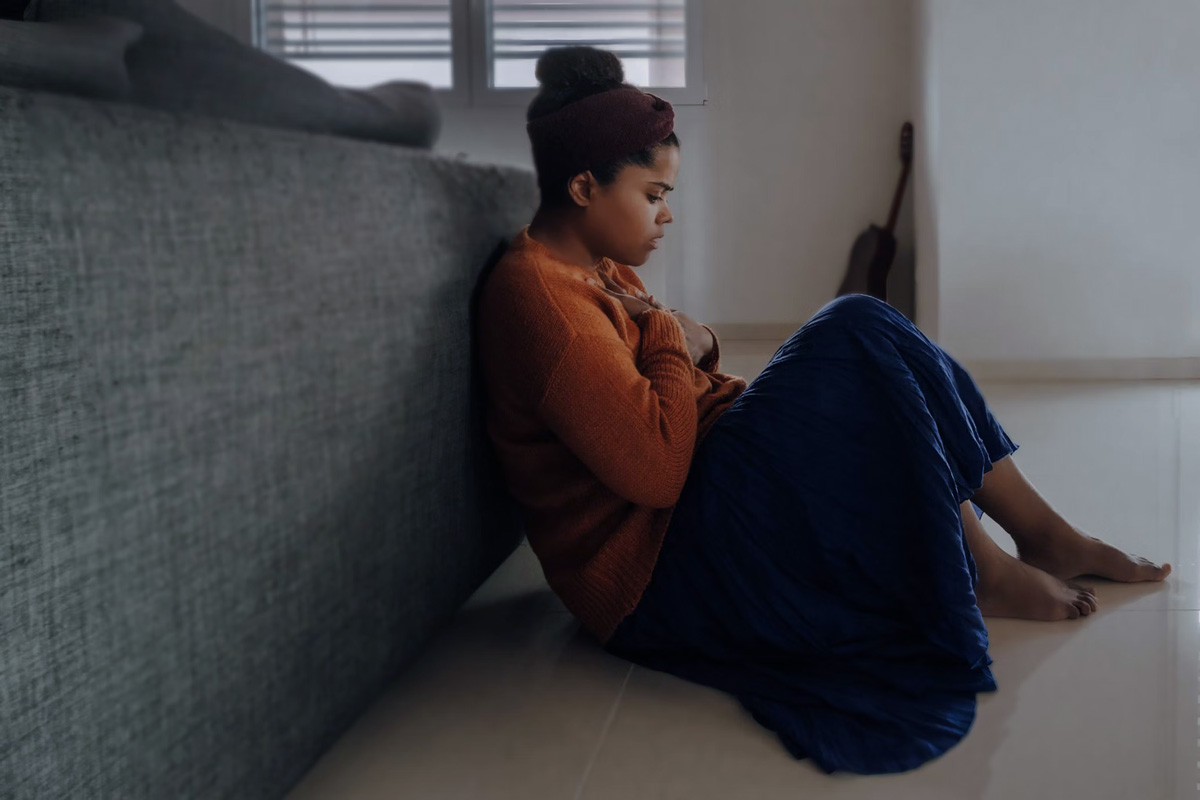
In Europe, the number of young people (aged 18-29) with mental health problems has at least doubled since the beginning of COVID-19. Suicide is one of the leading causes of death among adolescents aged 15–19 in our continent. In addition, almost two-thirds of young people are at risk of depression. Mental health issues are now more than ever disproportionately impacting younger generations. So, what can and should be done to address the situation and better protect the mental well-being of European youth?
Being mentally healthy is much more than the absence of mental disorders. As the World Health Organization (WHO) specifies, it is about a state of well-being that allows us to cope with the stresses of life, realise our potential, learn well and work well, and contribute to society.
Mental health conditions refer to mental disorders, psychosocial disabilities and any mental state causing severe distress or an increased self-harm risk. While these conditions are usually associated with lower levels of mental well-being, this could vary case by case.
What is certain is that the socioeconomic costs of mental health problems are significant. According to estimates of the Organisation for Economic Co-operation and Development (OECD), overall costs related to mental ill-health are equivalent to more than 4% of the Gross domestic product (GDP) across 28 EU countries (2015 data), equating to more than 600 billion euros.
Even if COVID-19 exacerbated them, mental health conditions were already an ongoing issue in Europe well before the pandemic. According to OECD’s report, almost 84 million Europeans lived with a mental health problem in 2016. Mental health problems caused around 84,000 deaths across EU countries in 2015, and this number more than doubled in 2020, reaching
Youth were also facing mental health challenges before the pandemic: in 2019, over 14 million young Europeans had mental health problems. However, if the period preceding the pandemic youth were less likely to have symptoms of depression than the general EU population, afterwards the reverse appeared to be true: there were at least 50% more young people with symptoms of depression than the EU average in the post-pandemic period. It is thus evident that the pandemic severely affected the mental well-being of young Europeans.
“What we have seen in the past five years is a massive increase in the number of suicidal thoughts among children and youth. All the current crises we face play a role, but it's not the full picture. Suicidal thoughts in children are a scary wake-up call and a clear example that something needs to be done in this sense,” points out Mr. Hannes Jarke, Project Coordinator specialised in Mental Health Policy at EuroHealthNet. – Read the full interview of Hannes Jarke
“Half of the mental health conditions are already there before the age of 18 and two-thirds before the age of 25. So, it is part of the epidemiology of mental disorders that they start very early in the life course, opposite to many other non-communicable diseases that we study. This is quite a relevant feature and, I think, also a reason for us to pay a lot of attention to youth in terms of their mental health,” explains Dr. Francisca Vargas Lopes, Health Policy Researcher at the Health Division of the Organisation for Economic Co-operation and Development (OECD). – Read the full interview of Francisca Vargas Lopes
Mental health, loneliness, and digitalisation: what’s the connection?
While digitalisation has brought many benefits and opportunities to society, it has also created risks, from digital addiction and attention-retention disorders to exposure to misleading content. It is striking that, in a world where young people (in the EU, 96% of them use the internet daily) are constantly connected through social media, we often hear the paradox of an increased state of loneliness among younger generations. In fact, according to the World Happiness Report, the oldest members of the population feel less lonely than younger generations despite having fewer interactions.
“Loneliness is a very complex matter, and there's a difference between being lonely and feeling lonely. People can be part of larger groups and have a lot of social interactions but still feel lonely,” clarifies Mr. Hannes Jarke.
Dr. Francisca Vargas Lopes adds, “There are also different types of loneliness. One aspect certainly relates to people’s expectations and desires. So, this sense of increased loneliness we are referring to could be connected to how people perceive themselves according to their expectations of meaningful relationships. For instance, it might be the case that youngsters would expect more links in real life due to the reality they face through social media. That said, in the last few decades, we can say that we all live more lonely lives. Households have become smaller; we have less connection to our neighbours, and we live busier lives with less time for bonding opportunities.”
Another interesting correlation to analyse when looking at new technologies and mental health is the time spent in front of the screens. Eurostat data show that Europeans spend between two and three hours per day outside of work on screen-related activities. This is also true for children and adolescents, whose time spent surfing the net has almost doubled in the last decade. Increased evidence also demonstrates that, for instance, using social media for too long can negatively impact our mental well-being and sleep. Nevertheless, limiting recreational screen time to no more than 2 hours per day can help children and teens be healthier.
“The evidence suggests that decreasing screen time seems to have positive effects on mental well-being, but it’s important to put this in context. We still don't fully understand all the mechanisms behind the use of new technologies in terms of increasing the risk of poor mental health or decreasing mental well-being. Some of these might be connected to what else you are not doing when you are on your phone or the computer, for example, physical activity or sleeping,” specifies Dr. Francisca Vargas Lopes.
To maintain a healthy lifestyle, WHO recommends that children and adolescents limit their sedentary time, particularly their time in front of a screen, while encouraging them to spend around an hour daily doing aerobic physical activity.
Mr. Hannes Jarke adds that “essentially anything that affects physical health can affect mental health as well. If you're healthy, it's easier for your brain to be healthy and your psyche to be healthy.”
Investing in the mental well-being of younger generations
In its 2015 report “Fit Mind, Fit Job,” the OECD found the need for whole-government strategies to address mental health issues beyond the healthcare sphere. To improve outcomes for individuals with mental health conditions, there was a Recommendation to adopt an integrated approach to mental health across four policy areas: youth, workplace, health, and welfare.
Actions that European countries should take to strengthen mental health policy include training and involving front-line actors, emphasising early intervention in all policy areas, and providing integrated health, education, and employment services.
“Every five years, we monitor OECD countries’ progress towards implementing the Recommendation; the first assessment was conducted in 2021. The good news is that we saw some real progress when it comes to youth and education policies. Most countries have increased their efforts to train better, for example, teachers or school counsellors, to identify youngsters with mental health conditions. There was also the implementation of universal and selective preventive interventions, such as monitoring and improving the school climate or improving students’ social-emotional learning skills. There's now a good body of evidence about interventions that work, mostly in schools, and can be scaled up and adopted by other countries,” stresses Dr. Francisca Vargas Lopes.
The EU has also recently adopted its first comprehensive mental health strategy, emphasising research and access to mental health professionals, with a special focus on children and young people.
According to Mr. Hannes Jarke, “The strategy was a milestone, and now it depends on how it's implemented across the member states. However, further steps should actively involve youth and children from the start, not just as survey participants but by bringing ideas to the table. My experience with co-creation is that it can improve things massively. You can conduct the best surveys and then run the best meta-analysis across all available studies. But, when you start developing programmes and interventions, you can easily miss something that a person living in that situation will just tell you immediately.”
Finally, he adds, “Mental Health is both determined by, and also a superdeterminant of many aspects of life, including the socioeconomic factors such as the safety of our environments, physical health, the workplace, and quality of life. That’s why it is important that mental health considerations are made across all policies.”
Related content:
• A scientist’s opinion: Interview with Dr. Francisca Vargas Lopes about the mental health of young people
• A scientist’s opinion: Interview with Hannes Jarke about the mental health of young people