
Science communication beyond the headlines: interview with science journalist Kai Kupferschmidt
on June 11, 2025
-
Contributors
Monica Hoyos Flight -
Experts
Kai Kupferschmidt -
Categories
Articles, Communication -
Tags
europe, interview, journalism, media, misinformation, pandemic, science, youth -
Share this
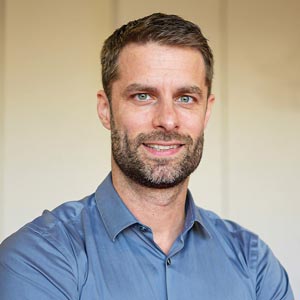
This year, on 13 June, the European Science-Media Hub hosted a science communication workshop at the European Youth Event in Strasbourg. We talked to its main speaker: 'Science' magazine journalist Kai Kupferschmidt ahead of the event. He mentions the challenges science journalism is facing and the large presence of mis- and disinformation: “As humans, we’ve always been drawn to certain types of information, about dangers or gossip for example, because of its potential importance for survival."
 Kai Kupferschmidt: As a teenager living in London, I was fascinated by popular science books and the kind of questions they were addressing, such as ‘How does our mind work?’ and ‘Is there life on other planets?’. These books didn’t make me want to become a scientist but rather, they sparked an ambition to speak with researchers and understand how they are advancing knowledge across a broad range of topics. So, I studied science and then I studied journalism and became a science journalist!
On 13-14 June, thousands of young people from across the European Union gathered in Strasbourg for the 6th edition of the European Youth Event (EYE2025). The event offers a unique opportunity for them to engage with Members of the European Parliament, other European decision-makers, experts, activists and content creators, on matters affecting their lives and the future of Europe.
As part of the ‘EMPOWER track’ of the programme, which aims to boost participants' active citizenship skills, the European Science Media Hub (ESMH) hosted a workshop ‘Communicating Science’ on Friday 13 June at 14:30h (room N1.3), featuring science journalist and contributing correspondent at Science magazine, Kai Kupferschmidt.
I gather you wanted to become a science journalist from a young age, what inspired this career choice?
Kai Kupferschmidt: As a teenager living in London, I was fascinated by popular science books and the kind of questions they were addressing, such as ‘How does our mind work?’ and ‘Is there life on other planets?’. These books didn’t make me want to become a scientist but rather, they sparked an ambition to speak with researchers and understand how they are advancing knowledge across a broad range of topics. So, I studied science and then I studied journalism and became a science journalist!
What science stories are you particularly interested in covering or enjoy writing about?
Kai Kupferschmidt: I stumbled into the field of infectious diseases by accident really. My first job was working at a daily newspaper called Der Tagesspiegel in Berlin, and in 2011 there was a big outbreak of a very dangerous E. coli strain in Northern Germany that killed over 50 people in the space of a few days. I was writing about that when Science magazine approached me. They were looking for someone to report on the outbreak in English.
As a science journalist, covering infectious diseases is fascinating. Stories often involve life or death situations, it is often unclear why and how the outbreak is happening, and there is lots of research being conducted in real-time. There is a mystery and urgency about it that is very exciting and in some cases, such as during the Covid-19 pandemic or the Ebola outbreak in Nigeria in 2014, personally terrifying.
Another interesting aspect is that in every outbreak there is a societal component. You can’t explain why a certain pathogen is causing an outbreak in a particular location without understanding a lot about the place.
For instance, the Middle East Respiratory Syndrome (MERS) outbreak in South Korea in 2015 was linked to how people were using the healthcare system, going from hospital to hospital. An outbreak isn’t just about a pathogen doing something; an outbreak is what happens at the interface between a pathogen and a society. This intersection raises questions that extend beyond the scientific domain, as we saw during the Covid-19 pandemic, virologists couldn’t answer some of the questions we were facing as a society.
Reflecting on your experiences during the Covid-19 pandemic, what key lessons did you learn about science journalism?
Kai Kupferschmidt: While reporting on the Covid-19 pandemic I was struck by just how ubiquitous, how present misinformation is. I felt I needed to understand more about this phenomenon if I wanted to do my job as an infectious disease reporter well.
So, I took a year off to do a Knight Science Journalism Fellowship at MIT (Massachusetts Institute of Technology) in the US on the topic of misinformation. I attended a lot of classes by historians of science and psychologists who are researching the topic, and now I divide my time between working on infectious diseases and issues related to mis- and/or disinformation.
What are the main challenges for science journalists today?
Kai Kupferschmidt: With scientists and scientific institutions under attack in many places, there is a temptation to slip into the role of defender of “the science”. Actually, a lot of people, including researchers, think that our job is just explaining scientific results to the public. That is a part of it, but scientists themselves can often do that very well.
Science journalists do more than that: we report the news, cover conflicts, hold power to account and spotlight the scientific endeavour. So, we have to make sure we cover the process of science, including the ways in which it is often flawed in practice, such as misconduct and fraud.
In the past, science journalists have not been very good at explaining the scientific process; science is not about absolute facts; it involves constant questioning, which can be unsatisfactory for readers. One of the challenges is describing this uncertainty in a good way.
On the one hand the stories that most interest me as a science journalist are at the frontier of knowledge and so come with a lot of uncertainty. On the other hand, our duty is to serve our readers and listeners, which sometimes means revisiting settled science, such as debunking the myth that the MMR vaccine (against measles, mumps and rubella) causes autism.
I think the pandemic shifted many people’s idea of how science works, leading them to question things that are actually on much firmer ground on the spectrum of certainty.
So as a journalist, we need to make it much clearer where we are on this spectrum of certainty when we talk about science: Are we talking about the vast uncertainty that often comes with completely new research areas, or is there a mountain of evidence as there is disproving the claims about the MMR vaccine. And we need to explain the flaws in data that some cite as proof of the contrary.
We work in a really tough information ecosystem. Reality-based science journalism has to compete with dramatic conspiracy theories and misinformation. Unfortunately, the research budget cuts in the US are making the situation worse: scientists are becoming hesitant to engage with journalists for fear of drawing undue attention to their work.
How have media consumption habits changed the landscape of science journalism?
Kai Kupferschmidt: Basically, nuanced reporting is getting harder in a world where it seems everyone wants a fun, 30 second video. Not every interesting and important science story can be presented in that way.
There are several issues at play. One is the sheer amount of information available. As humans, we’ve always been drawn to certain types of information, about dangers or gossip for example, because of its potential importance for survival.
That was OK when information was scarce or we could only access a few sources. Now, we can spend all day consuming information that caters to our tastes. Our information diet can soon become full of ‘empty calories’.
Another problem is the change in gatekeepers. The information ecosystem is no longer shaped by individuals committed to promoting reliable information, but rather by algorithms designed to maximise the time we spend online and which people have learnt to exploit for their own goals and gains.
We need to get better at explaining not just how science works, but also how journalism works. Not all information holds equal value and uncovering the truth requires a lot of effort. We also need to be able to accept a certain level of uncertainty, we cannot erase it just to appeal to people.
What were you most looking forward to at EYE2025 and, in particular, your session on Science Communication?
Kai Kupferschmidt: At the EYE2023 event I gave a class on science journalism and I loved meeting young people who are growing up in this complex information landscape and interested in trying out new ways to make the truth matter.
I learnt a lot about their media habits and came away really energised. At this year’s event I was looking forward to have more of a discussion about what makes certain science stories more entertaining and satisfying and how we can use that when doing science journalism, but also what the downsides are.
Useful link:
• European Youth Event