Interview with Prof Dietram A. Scheufele on the challenges of science communication today
on July 22, 2026

-
Contributors
Rosa Garcia-Verdugo -
Experts
Dietram A. Scheufele -
Categories
Articles, Communication -
Tags
ai, algorithms, climate, engagement, featured, framing, interview, misinformation, polarization, science, trust, vaccines -
Share this
Science communication in times of polarization and populism
Your previous work showed that providing more scientific information on contested issues can deepen rather than reduce political divides. How does this affect science communication on topics like climate change or vaccine policy in an increasingly polarized Europe?
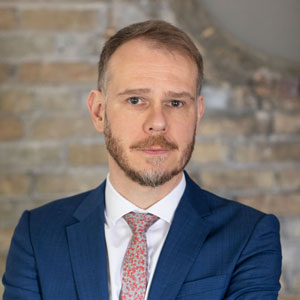 Dietram A. Scheufele: What that means for science communication is that we can’t just put facts in front of people. We need to make sure that those facts, at the very least, are not at odds (or seen as at odds) with the views of those we want to connect with. And we’ve known this for decades. These are not new findings.
What researchers call the “deficit model” — the assumption that public skepticism is simply a knowledge problem that more information can fix — has been thoroughly discredited by decades of empirical work on motivated reasoning. The real issue is not knowing but acting on this knowledge.
How can science communicators avoid appearing either too neutral or too biased when scientific consensus becomes politically contested?
Dietram A. Scheufele: Daniel Kahneman, Nobel Prize in Economics in 2002, showed that the same information activates different mental pathways depending on how it is framed. Framing — not what information we present, but how we present it — has been central to my own research for almost three decades. During COVID, a study across more than 80 countries found that most official communication was framed on loss, the exact opposite of what social science recommends. The lesson is straightforward: frame your message around audience’s values, not your own. For instance, in the US, conservatives are increasingly talking about 'global competitiveness' and 'energy independence' instead of 'climate change.' Both lead to identical policy outcomes, but the framing is completely different. That is where the lesson lies: how can I connect my facts to your values?
What did the Covid-19 pandemic reveal about how institutional science communication can either protect or erode public trust?
Dietram A. Scheufele: During the pandemic, science was asked to produce policy recommendations at a speed it is simply not designed to work at. In addition, we were under pressure to correct information we knew to be wrong, such as drinking bleach for protection, using science we weren't entirely sure would turn out to be right, which left us exposed when things shifted. 'Just follow the science' doesn't work, because policy is a complex amalgam of regional values, preferences, and — hopefully — the best available scientific evidence. What we should be communicating, instead, is the epistemic integrity of the scientific process itself: not the certainty of any given finding, but the reliability of how findings are produced, tested, and revised.
AI's impact on science communication and research
What are the most pressing risks posed by AI in knowledge discovery, and how might these affect the reliability of the scientific record?
Dietram A. Scheufele: Researchers who adopted AI early are three times as likely to be published and five times as likely to be cited. But much of the science produced with AI does not build on previous science, it happens in silos, because AI defines its own knowledge space. We are narrowing the scope of research.
What’s worse, peer-reviewed conference proceedings from academic institutions such as Cambridge and Harvard have been found to contain AI-generated hallucinations, which were probably missed because reviewers also used AI. Those proceedings become training data for the next large language models. Errors compound with each iteration. Yet, the public at the end of that chain is still expected to trust science as the best way of knowing.
How algorithms are reshaping the information ecosystem
Who holds responsibility for the algorithmic fragmentation of public discourse, and what evidence-based interventions exist?
Dietram A. Scheufele: Social media is the first culprit that comes to mind, but AI will dial this problem up even further. Bespoke, tailored AI can phrase content toward your individual preferences in real time. We know people respond better to messages that feel like they were written for them. That can be genuinely useful, for instance for emergency communications, but the same mechanism, applied commercially or politically, becomes very dark, very quickly. I would describe it as dialing an already serious problem of manipulative communication to 15 on a 10-point scale.
Markets will not fix this as the current business model works too well. We are now expecting parents to protect their children from a medium engineered to find their weaknesses. This is not realistic, as these platforms are specifically designed to exploit our psychological vulnerabilities. When Deep Blue beat Kasparov at chess, nobody said Kasparov needed to learn to play better. Meaningful regulatory intervention is the only credible path.
What are the most urgent structural changes that would most improve public engagement with science?
Dietram A. Scheufele: The hardest challenge is reaching people beyond the proverbial choir. Every few years a high-profile mission generates public enthusiasm, but those audiences are not the ones I worry about. The problem is people who see science's apparent inconsistency — coffee is good today, but not tomorrow — as evidence of unreliability rather than as a self-correcting process at work. Building genuine rapport with communities that are not science-adjacent, meeting them on their ground and engaging with their actual concerns, is the structural priority.