-
Shaping the future of open science in Europe: ‘Generative AI is transforming scientific exchange’
 “Open science represents modern knowledge creation, but also supports evidence-based decision-making,” explains Prof. Dr. Julia Priess-Buchheit, professor at Kiel University with expertise in higher education, research integrity and open science. Open science also affects scientific exchange, that is,...
 -
The future of science journalism: AI, trust and democracy
 Artificial intelligence is transforming the way information is created, distributed and consumed. Newsrooms are experimenting with AI-powered tools, audiences are increasingly exposed to algorithmically curated content, and concerns about misinformation continue to grow. At the same time, public trust...
 -
ESMH Summer School 2026: the human side of AI in science media
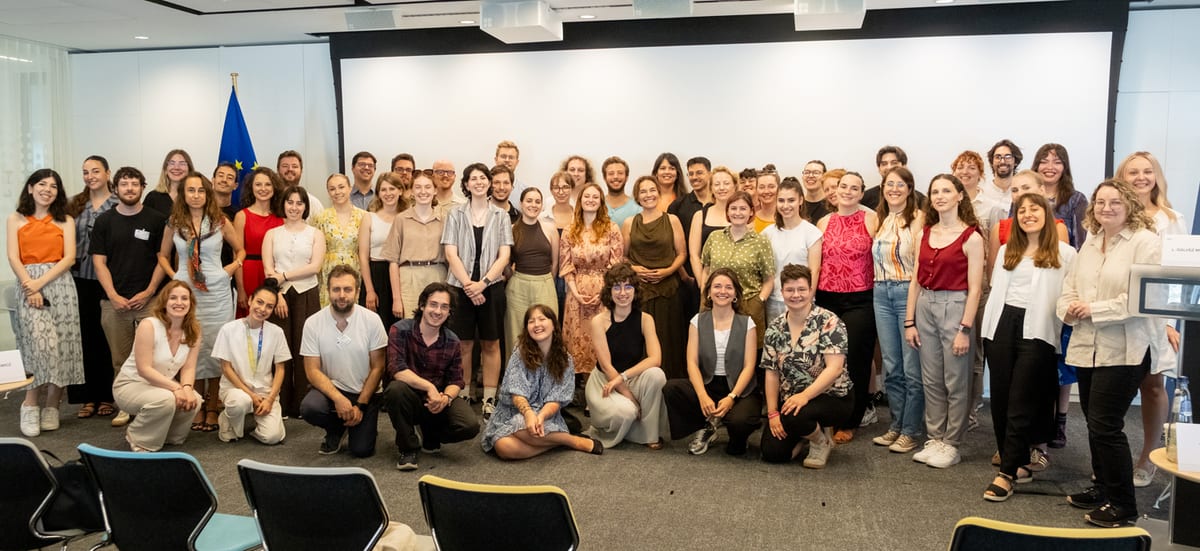 Four days, six interactive sessions, fifty science communicators from nineteen Member States: the 2026 European Science-Media Hub (ESMH) Summer School set the stage to discuss the use of artificial intelligence and ethics in science journalism. The 2026 ESMH Summer School took place at the European...
 -
2026 ESMH Summer School kicked off
 From 22 to 25 June 2026, the European Science-Media Hub (ESMH) of the European Parliament hosted its sixth Summer School for young science journalists and content creators in Brussels. The 2026 ESMH Summer School focused on science communication in the age of artificial intelligence (AI). It explored...
 -
AI and the future of journalism: Balancing innovation and responsibility
 The advent of generative artificial intelligence (AI) is already transforming society across a wide range of sectors and journalism is no exception. The challenge is twofold: AI can both support and disrupt journalistic work, acting at once as a powerful tool and a potential competitor. At the same time,...
 -
Interview with Dr Maura Hiney on the future of research integrity in Europe
 How can we keep our trust on science in a world where research integrity is increasingly challenged? Experts are discussing different paths to ensure the continued integrity of the scientific process. One of them, Dr. Maura Hiney is an Adjunct Professor at University College Dublin Institute for Discovery...
 -
ESMH Summer School 2026: Science Communication in the age of Artificial Intelligence
On 22-25 June 2026, the European Science-Media Hub (ESMH) of the European Parliament held its sixth Summer School for young science journalists and content creators in Brussels, following a call for application published earlier this year. The 2026 ESMH Summer School focused on science communication... -
Can digital tools revive European democracy? Interview with Bjørn Bedsted
 Online discussion platforms, digital deliberation tools, and - more recently – tools using artificial intelligence are increasingly being explored as ways to involve citizens more directly in policymaking processes. But can technology truly improve democratic participation? And what risks come with handing...

European Science-Media Hub
Bringing scientists, journalists and policymakers together: communicate better sound science to all