
interview
-
Luc Piguet: 'Today, we have over 2,000 failed satellites in orbit'
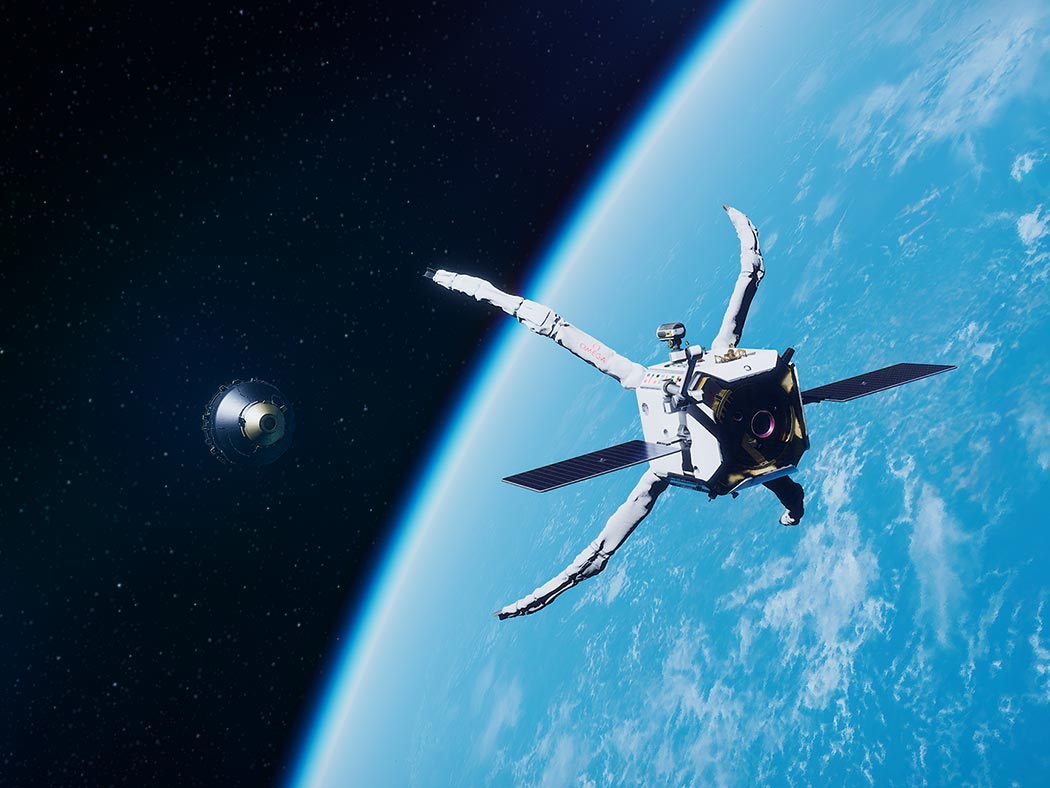 Interview with ClearSpace's CEO Luc Piguet on solutions for a sustainable circular space economy This Thursday 26 October, the European Parliament’s Panel for the Future of Science and Technology (STOA) will host a workshop on the Future of space - the sustainable path. We spoke with one of the speakers,...
 -
New STOA study on better access to medicines in the EU
 Interview with study author Simona Gamba When it comes to less profitable markets such as rare diseases, paediatric diseases or antimicrobials, medicines in the EU could be hard to come by, both in terms of price and availability. On Thursday 19 October, Senior Assistant Professor Simona Gamba (University...
 -
Virtual and augmented reality in education: huge benefits, but also ethical concerns
 Over the last decade, people have been suggesting that digital immersive technologies (DITs) such as virtual reality and augmented reality could supplement - or even replace - a variety of education activities of schools and universities. These technologies can create lifelike virtual environments for...
 -
Henry Ajder on generative AI: 'We need a balance between excitement and supervision'
 Henry Ajder is a renowned expert on generative artificial intelligence (AI) and deepfakes. He advises companies and governments including Adobe, Meta and the European Commission on the impact of AI on business and society. Ajder also hosted "The Future Will Be Synthesised", a BBC radio series on deepfakes...
 -
Interview with Prof. Stuart Haszeldine on increasing carbon storage capacity
 "50 Million tonnes of carbon storage capacity is welcome but it needs to be double that - we're already 50 years late on a 50 year problem", says Stuart Haszeldine, Scottish Carbon Capture and Storage Director and Professor of Carbon Capture and Storage at the University of Edinburgh (UK). Professor...
 -
'Heavy red meat eaters could be CO2-taxed in the future'
 "However, we also propose that fruit and vegetables should become more affordable." Interview with Eric Lambin, Chief Scientific Advisor to the European Commission, about the scientific consensus towards sustainable food consumption in the EU and the new scientific opinion on this topic. If you...
 -
The use of non-invasive brain stimulation for mental health and more: ethics and EU regulation
 As part of an international research consortium (the EU-funded STIMCODE project), senior researcher Dr Moritz Julian Maier and his team have just developed recommendations on EU regulation and a code of conduct regarding non-invasive brain stimulation techniques: electrically or electromagnetically stimulating...
 -
Prof. Mike S. Schäfer on ChatGPT and other generative AI tools: ‘A gamechanger for science communication’
 Mike S. Schäfer, Professor of Science Communication at the University of Zürich (Switzerland), has been investigating communication and artificial intelligence (AI) for several years. He is currently focussing on how the development of the technology and its impact on society are envisioned in public...