
Interview with Dr Johanna Leissner on how to tackle the threat of climate change to cultural heritage
on October 14, 2026
-
Contributors
Samuel Gregory-Manning -
Experts
Johanna Leissner -
Categories
Articles, Environment -
Tags
interview, climate change, cultural heritage, stoa, landscape, resilience -
Share this
Dr Johanna Leissner has been studying climate change impacts on cultural heritage for over 20 years and is active in several EU and UNESCO expert groups on this topic. She co-authored a study for the European Parliament's Panel for the Future of Science and Technology (STOA) “Climate change and cultural heritage: a technological approach to preservation”, which she will present at the STOA Panel meeting on 22 October 2026.
You have been writing about the threat climate change is posing to Europe's cultural heritage. Could you tell us what is meant by cultural heritage? What are the risks to cultural heritage posed by climate change, and why is it important we preserve it?
 Johanna Leissner: When we speak about cultural heritage, we are talking about much more than famous monuments. It includes historic and vernacular buildings, art collections and archaeological sites, but also cultural landscapes and historic gardens, including natural environments that have been shaped by human activity over centuries.
The European Union was a real pioneer in supporting research into how climate change affects cultural heritage. Twenty years ago, however, many people considered this mainly an academic issue. You could have asked: Why should we worry? The pyramids have stood for more than 4,000 years.
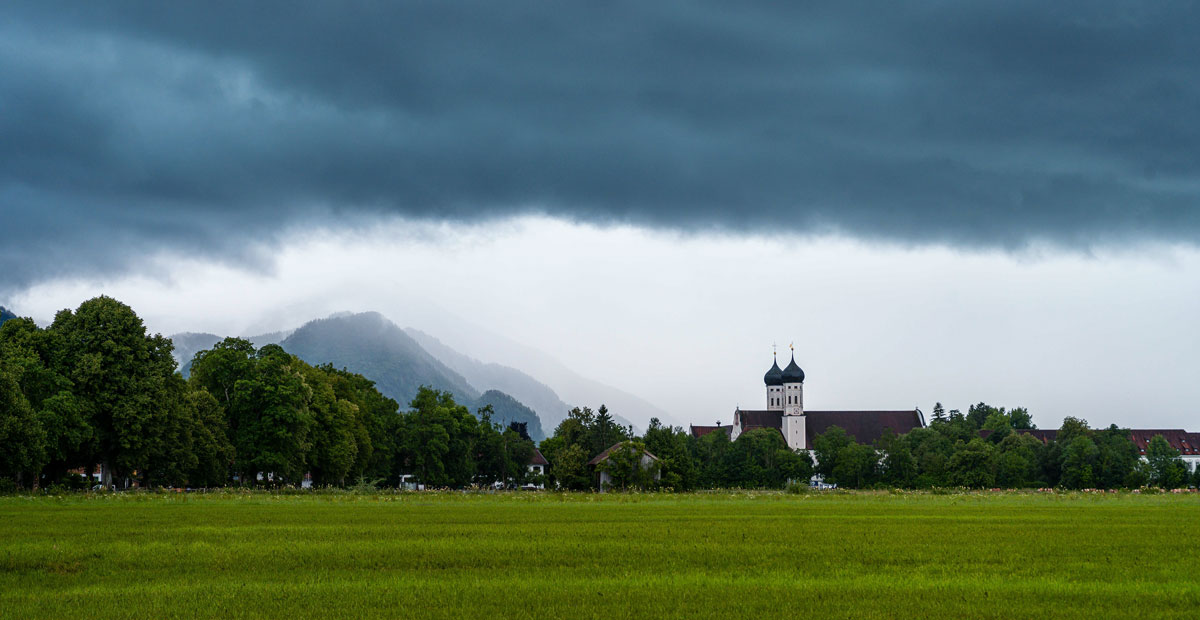
Today, the situation is very different. Particularly in the last five years, we have seen just how vulnerable cultural heritage can be. The devastating floods in Germany's Ahr Valley in 2021 caused billions of euros in damage. And in Bavaria in 2023, a hailstorm lasting only about ten minutes caused massive damage to one of the region's oldest monasteries, with restoration costs running into tens of millions of euros. The monastery is still not fully operational, so this is not only a major cultural loss but also has consequences for tourism and the local economy.
How is climate change reshaping conservation strategies for cultural landscapes, and what new considerations does it bring?
Johanna Leissner: Perhaps historic gardens provide one of the most visible examples of how climate change is challenging our understanding of heritage. Droughts and prolonged heatwaves are already placing enormous stress on trees and plants. But what happens when an iconic species that has defined a historic garden for centuries can simply no longer survive there?
This raises a fundamental question: do we preserve the original species at all costs, or do we preserve the character and function of the garden by introducing more climate-resilient species? In other words, climate change forces us to reconsider what authenticity actually means.
We face a similar challenge with built heritage. Monuments, historic buildings and bridges consist of materials that react to changes in temperature and humidity, while extreme rainfall, storms, hail and drought can accelerate deterioration. Climate change is therefore not only threatening individual buildings, objects or landscapes. It is challenging some of the fundamental principles of how we conserve cultural heritage.
But for me, there is an even more important point: cultural heritage is not simply an economic or touristic asset. It tells us who we are. Our monuments, buildings, landscapes and collections connect us with previous generations. What our ancestors created and what our civilisation has achieved provide knowledge and inspiration that we need in order to shape the future.
People also have a very strong emotional attachment to their heritage. Certain buildings, monuments and landscapes become part of the identity of a community.
Ukraine demonstrates this particularly dramatically. Cultural heritage has become a strategic target of war, while at the same time modern technologies are being used to document and safeguard it. This reminds us that when cultural heritage is threatened, we are not simply at risk of losing buildings or objects. We are at risk of losing part of our collective memory and identity.
What are some of the main challenges in building the resilience of Europe's cultural heritage to climate change impacts?
Johanna Leissner: Today, we have a good understanding of how climate change is affecting cultural heritage. The real challenge now is how to respond effectively. We need adaptation and mitigation to go hand in hand.
There are also limits to how far we can adapt. Take sea-level rise, for example. In our study for the STOA Panel, we look at Venice and its impressive MOSE flood-barrier system. Since becoming operational in 2020, it has protected the city from flooding over more than 100 occasions. But it is an extremely costly infrastructure of 7 billion Euros and as sea levels continue to rise, there are questions about how long such systems can provide sufficient protection and whether society is willing and able to spend so much money.
We already have many good adaptation measures and technologies available. The problem is that they are not yet being implemented effectively at the scale that is needed.
Energy use is a good example. If rising temperatures mean that we increasingly need to cool large historic buildings such as cathedrals, museums or historic houses, this can require significant amounts of energy. If that energy is not produced sustainably, we risk adapting to climate change in a way that contributes to the problem we are trying to solve.
At the same time, we need to protect the historic materials themselves. During extreme heat, surface temperatures on exposed materials can become exceptionally high. Repeated cycles of heating and cooling, together with changes in humidity, place additional stress on historic materials and can accelerate their deterioration and even destruction.
So, for me, this is the key challenge: we cannot look at adaptation and mitigation separately. We need integrated solutions that protect cultural heritage from the impacts of climate change while also reducing energy demand and emissions. And we need to find ways of moving these solutions from individual demonstration projects to large-scale implementation across Europe.
How can technology further help build the climate resilience of Europe's cultural heritage?
Johanna Leissner: It is always better to be prepared than to react after the damage has occurred. And today, we have very powerful technological tools available, including Earth observation, satellite technologies and remote sensing.
When we combine these technologies with increasingly precise climate projections and forecasting, we can develop very effective early-warning and decision-support systems. These can help heritage managers assess risks, anticipate extreme events and take preventive action. Sometimes, even 30 minutes of advance warning can make a real difference and allow measures to be taken to reduce potential damage.
So, the technologies are increasingly available. The challenge is to bring them into everyday heritage management and deploy them at scale. The cultural heritage sector is not yet sufficiently prepared for this. We need greater investment, but we also need skilled people who can understand and apply these technologies and translate scientific information into practical action.
Ultimately, we need to move from reacting to disasters towards anticipating risks and preventing damage wherever possible.
What policy options are important to consider for the future of science, research and technologies in preserving Europe's cultural heritage?
Johanna Leissner: European policy has certainly advanced over the last decade, but cultural heritage is still not sufficiently integrated into many of our major policy frameworks.
In the European Green Deal, for example, cultural heritage is not explicitly addressed. In other important European policies on climate, risk and the energy performance of buildings, heritage may be mentioned, but often without sufficient detail on how protection and adaptation should actually be implemented.
This is also relevant to the European debate on competitiveness and innovation. Mario Draghi's report “The future of European competitiveness” places a very strong emphasis on innovation. And this is precisely where I think we should recognise an important European strength: Europe is a world leader in cultural heritage research and technologies. But that leadership is still not sufficiently recognised outside the heritage sector itself.
We have worked for many years to bring cultural heritage higher onto the international climate agenda, including discussions around COP, the G7 and G20. This is extremely important because cultural heritage needs to be at the table when policies and programmes are being designed. If nobody around that table is thinking about heritage, it becomes very difficult to integrate it afterwards.
This is why we are very pleased and grateful that the STOA Panel has initiated this report. The timing is particularly important as Europe is discussing its future research, innovation and competitiveness priorities. Cultural heritage technologies should be recognised as an area of European technological strength and incorporated much more systematically into these future programmes.
It also offers considerable potential for international cooperation, for example by sharing climate information, monitoring technologies, early-warning tools and decision-support systems.
And perhaps most importantly, protecting cultural heritage cannot be achieved by one discipline, one institution or one country alone. We need European cooperation that brings together scientists, technology developers, heritage professionals, policymakers and wider society. This is how we can demonstrate the value of cultural heritage, strengthen its resilience to climate change, and ensure that it can be passed on to future generations.
Useful link:
STOA Panel meeting on 22 October 2026, 9:30h CEST, live webstreamed.